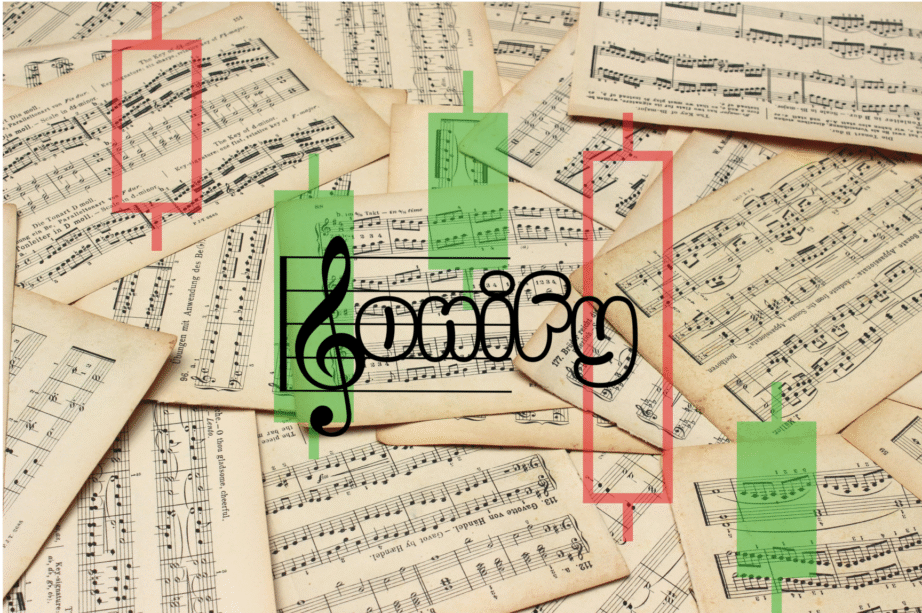
The Future of AI Market Music
In the rapidly evolving sphere of financial trading, understanding data through conventional means can often restrict analytical potential. Enter the fascinating world of market sonification — a technique that transforms market data, charts, and indicators into audible forms. This innovative approach not only bridges the gap between data interpretation and artistic expression, but it also offers traders, analysts, and creatives a unique lens through which to experience market movement.
Mapping Price Levels to Musical Notes
One of the primary principles behind market sonification is the mapping of price levels or momentum to musical notes or octaves. This means that every price movement can correspond to a specific musical note. For instance, higher price levels can be mapped to higher pitches, while lower price levels translate to lower pitches. This creates a direct auditory representation of price movements.
- Advantages: This method allows traders to perceive price levels instantly through music, providing an additional layer of insight that traditional charts may not convey.
- Implementation: Using software tools, traders can program these mappings in real time, allowing the audio to reflect live market data.
Expressing Volatility through Rhythm
Volatility, often expressed numerically, can be challenging to interpret visually for traders. Sonification provides an innovative approach by using tempo or rhythm to express fluctuations in volatility. For example, when market volatility increases, the tempo of the audio can quicken, creating a sense of urgency and activity.
- Examples: A sudden spike in volatility might produce rapid, staccato notes, while a calm, stable market might generate smoother, slower melodies.
- Benefits: This rhythmic interpretation allows traders to gauge market mood intuitively, leveraging auditory cues alongside visual data.
Translating OHLC Data into MIDI
The Open-High-Low-Close (OHLC) data model is fundamental for traders. By translating OHLC data into MIDI values, one can effectively convert trading data into musical compositions. Each element of the OHLC can map to different MIDI parameters, such as pitch, duration, or velocity.
- Practical Application: For example, the open price could determine the key in which a piece is played, while high and low prices might influence the melody’s variance and complexity.
- Creative Output: Algorithmic compositions can be generated that reflect market activity, creating a new form of market analysis through music.
Real-World Examples of Algorithmic Composition
Several pioneering projects have demonstrated the effectiveness of algorithmic composition in financial markets. These projects leverage AI and machine learning to produce unique soundscapes based on market data.
- Example 1: A financial technology firm developed an application that generates a musical score based on real-time trading patterns. Traders listening to this live feed can instantly recognize significant market changes through shifts in the music.
- Example 2: Artists have collaborated with trading firms to create installation pieces where live trading data is sonified into ambient music, making real-time market changes accessible to a broader audience.
Educational and Accessibility Benefits
Sonifying financial information also offers educational advantages. By presenting data audibly, learners can engage with market concepts in new and dynamic ways. This method fosters accessibility, especially for individuals who may struggle with visual data interpretation.
- Engagement: Auditory learning can enhance understanding and retention of complex financial patterns.
- Inclusivity: Sonification can help democratize trading knowledge, allowing people from various backgrounds to engage with financial data.
Conclusion: The Intersection of Art and Finance
The fusion of art and finance through AI market music presents an exciting frontier. As traders, analysts, and creatives continue to explore market sonification, the potential for enriched data interpretation grows. Incorporating auditory elements into financial markets not only enhances analytical perspectives but also inspires a new generation of artists and thinkers. Market sonification can be a powerful tool for those willing to embrace the sound of data.
For further exploration into the concepts discussed, check out resources such as Investopedia’s overview of music technology or the IEEE’s insights on algorithmic composition. Additionally, the NASA music projects provide inspiration on how diverse fields intersect with sound.

1 thought on “The Future of AI Market Music: Real-Time Audio Feeds for Traders”