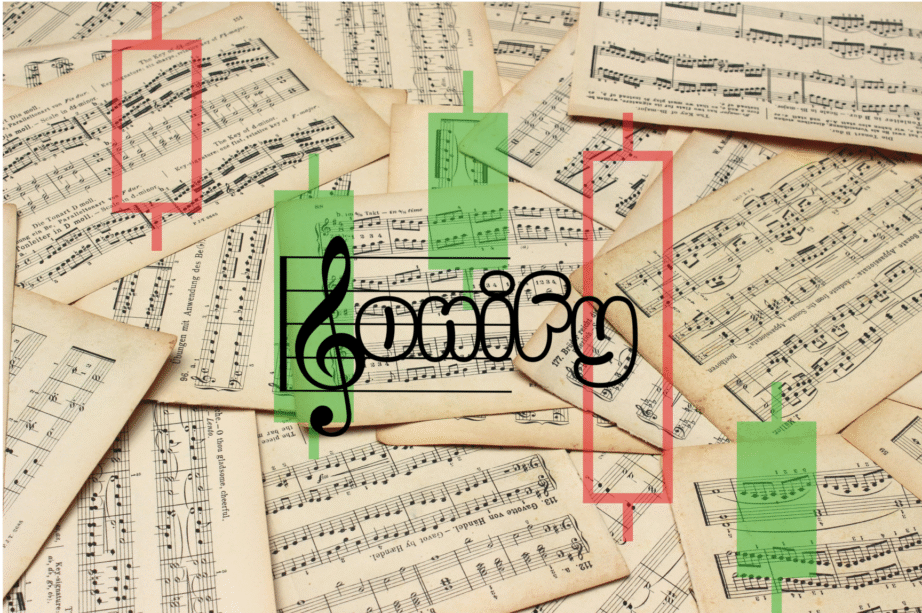
Detecting Volatility with Audio Cues: The Power of Sound in Understanding Market Volatility
Market sonification brings an innovative twist to how traders and analysts interpret financial data. By transforming price movements, trading patterns, and market indicators into sound, we create a multi-sensory experience that can enhance understanding and insight.
This article delves into the world of market sonification through examples such as the Bollinger squeeze and Keltner channel, illustrating how audio cues can aid in detecting volatility.
Mapping Price Movements to Musical Notes
One way to sonify market data is by mapping price levels and momentum to musical notes. Each price point can correspond to a specific frequency, creating a tone that reflects market behavior. Here’s how it can be done:
- Price Levels: Assign a note or pitch to specific price levels, particularly resistance and support zones. Higher prices might correlate with higher frequencies.
- Momentum: Use the rate of price change to determine duration or rhythm. Rapid price increases might yield short, quick notes, while slower increases could result in longer, sustained sounds.
This auditory mapping allows traders to hear rather than visually analyze complex data, potentially speeding up decision-making processes.
Creating an Audio Spectrum for Traders
A practical application of this technique is the creation of an audio spectrum where varying frequencies represent different sectors or instruments. By layering these sounds, traders can identify correlations and divergences between assets quickly.
Expressing Volatility through Rhythm
Volatility is a critical aspect of market analysis that can be creatively communicated through rhythm. By translating the degree of volatility into tempo, traders can gain insights into market dynamics:
- Tempo: Fast tempos could indicate high volatility, where prices swing dramatically in a short period. In contrast, slower tempos suggest stability.
- Rhythm Patterns: Different rhythmic patterns can represent various market conditions. For example, a syncopated rhythm might indicate erratic or unpredictable price movements, whereas a steady beat denotes order and predictability.
This rhythmic translation fosters a deeper understanding of market trends and behaviors, offering a unique lens for assessing financial health.
Sonifying the Bollinger Squeeze
In a traditional visual chart, a Bollinger Squeeze occurs when the upper and lower bands contract, signaling that the market is quiet and preparing for an explosive move.
In an audio framework, this period of low volatility is represented by a tightening harmonic interval. The pitches of the upper and lower boundaries move closer together, creating a focused, singular drone.
When the squeeze finally breaks out, the audio spectrum rapidly expands. The upper pitch spikes higher while the lower pitch drops away, creating a wide, dramatic chord that alerts the trader to the sudden injection of market momentum without them ever needing to look at the screen.
The Keltner Channel Sound Mapping
While Bollinger Bands expand and contract based on standard deviation, Keltner Channels rely on the Average True Range (ATR).
Sonifying a Keltner Channel involves establishing a steady, rhythmic baseline or “metronome” that represents the moving average. When price action remains safely inside the channel, the audio cues remain stable and predictable.
However, the moment price cuts outside the Keltner boundary, the sonification system triggers a sharp timbre change—shifting from a smooth sine wave to a bright, aggressive sawtooth wave. This immediate shift in sound texture allows a trader to instantly audit the market and detect institutional buying or selling pressure.
Translating OHLC Data into MIDI values
Open, High, Low, and Close (OHLC) data is essential for traders. By converting this data into MIDI parameters, it becomes possible to create complex musical compositions that reflect market behavior:
- Pitch Generation: Each component of OHLC data can be mapped to specific MIDI notes, allowing for the creation of melody lines based on market movements.
- Velocity Representation: The trading volume can dictate the velocity of the MIDI notes, making heavier trading days create more intense musical passages.
The resulting composition not only provides an auditory reflection of trading activities but also serves as an engaging way to present market data to a broader audience.
Algorithmic Composition: Real-World Examples
Several artists and technologists have experimented with algorithmic compositions derived from market data. These projects often blend finance with creativity:
- The Stock Market Symphony: Composers have created full symphonies where the orchestration and dynamics correspond to stock performance metrics.
- Visual and Audio Art Integrations: Platforms that visualize market trends alongside soundscapes provide an artistic representation of financial data, enhancing the user experience.
Educational Tools and Accessibility Benefits
The sonification of financial information has significant educational benefits. By engaging with data through sound, a broader audience can access complex market concepts:
- Visual Impairment Support: Audio representation of charts and graphs is valuable for those with visual impairments, allowing them to perceive market trends audibly.
- Enhanced Learning: Students and new traders can learn market behavior through sound, which can be more intuitive than visual charts for some individuals.
Ultimately, this enhances financial literacy and encourages diverse learning methods in traders and analysts alike.
Designing a Multi-Sensory Trading Station
To implement these audio cues effectively, traders must carefully balance their acoustic environment. Layering too many market indicators into sound frequencies can quickly lead to auditory fatigue.
A clean setup involves mapping only your primary execution triggers to distinct musical notes. Meanwhile, keep secondary momentum indicators mapped to subtle volume or panning adjustments.
For instance, as a squeeze develops, you can pan the upper band sound to the right audio channel and the lower band to the left audio channel. When the breakout occurs, the physical sensation of the sound moving across your headphones provides an immediate, directional cue regarding the market’s true momentum.
Conclusion: The Intersection of Art and Finance of Detecting Volatility with Audio Cues
Market sonification bridges the gap between financial analysis and creative expression. By turning data into sound, traders and analysts gain a multifaceted understanding of market movements. The use of audio cues, rhythms, and melodies can inform trading strategies, educate new entrants, and contribute to a richer comprehension of market dynamics.
For those interested in exploring this intersection between finance and art further, consider diving into some critical resources on the subject:
Investopedia offers a wealth of financial knowledge, while Music Tech Fest explores innovative applications of technology in the music realm. Finally, you can explore the works of Nature, which often intersects technology, science, and artistic expression.
Originally posted 2025-10-26 11:00:33.